
Lexington Parole and Probation Compared
The South Carolina Department of Probation, Parole and Pardon Services, known as SCDPPPS, supervises several kinds of community cases in Lexington County. It is separate from the South Carolina Department of Corrections. SCDC runs state prisons and records a prisoner's actual departure. SCDPPPS records the supervision that may exist after that departure. Probation can be ordered by a judge without a prison term, or it can follow a suspended part of a sentence. Parole is a Board decision that lets an eligible prisoner serve the balance of a sentence in the community under stated conditions.
A supervision result therefore answers a narrow question. It can confirm that the person is under SCDPPPS authority. It does not by itself say which jail released the person, when the gate event occurred, or whether the person first moved from Lexington County custody to SCDC. Those facts belong in the county release sheet, SCDC Released Inmate Search, or court record.
| Point | Parole | Probation |
|---|---|---|
| How it begins | The Board grants community release from a prison sentence after eligibility and review. | A court orders community supervision, sometimes instead of prison or after a suspended sentence. |
| Who supervises | SCDPPPS supervises the parolee under Board conditions. | SCDPPPS supervises the probationer under the court order. |
| What it proves | A current result supports ongoing parole status, not the exact prison exit time. | A current result supports probation status, not that the person served a prison term. |
| How it can end | Discharge follows the governing sentence and Board authority, unless a violation changes the path. | Completion or court action ends the probation term, subject to any violation or revocation. |
The terms are easy to blur. These short definitions preserve the legal difference.
- Parole
- Conditional release from prison while the rest of a sentence remains under Board jurisdiction.
- Probation
- Court-ordered supervision in the community, which may be imposed without a prison release.
- Discharge
- The formal end of the applicable custody or supervision obligation, not merely a move out of jail.
- Absconder
- A supervised person alleged to have stopped reporting or left supervision without authority.
Note: County of supervision may differ from the county of conviction and from the county or prison that released the person.
Check Lexington Post-Release Supervision
The official SCDPPPS Offender Search is the first public check for Lexington County parole and probation. Its fields are designed for one person, and only certain combinations work. The published combinations include first plus last name, SID alone, first name plus birth year, last name plus birth year, county plus SID, county plus first name, or county plus last name. A SID is the state identification number tied to a person's criminal record. Use it when known because it helps distinguish similar names.
The agency warns that results represent the previous day. It also states that a person who is no longer supervised may not appear. A missing name is not proof that the person never had Lexington County supervision, that supervision ended on a certain date, or that no warrant exists. Current-day questions belong with the Lexington office. Release verification follows a separate chain.
| Search field | Published use |
|---|---|
| First Name | Use with last name, birth year, or county. |
| Last Name | Use with first name, birth year, or county. |
| SID Number | Search alone or pair with county. |
| County | Pair with SID, first name, or last name. |
| Year of Birth | Pair with first name or last name. |
- Open the official SCDPPPS search and enter one of its valid field combinations. Avoid broad or partial searches when a SID or birth year is available.
- Compare the full name, birth year, SID, county, and displayed supervision category. Open the linked record when more than one name appears.
- Read the result as prior-day community-supervision data. Do not treat the county field as the place of conviction or the facility of release.
- Call the Lexington County office for same-day confirmation or a question about the assigned office. The public search may lag a change.
- Confirm the physical release separately. Use SCDC's released list for a state-prison departure or LCSD records for a county-jail event.
The Lexington County released-inmate search path explains how LCSD, SCDC, court, and federal records divide that work. It matters here because a supervision hit confirms status after release, while a current jail roster confirms custody. Neither should be used as a substitute for the other.
The official supervision-search screen shows the accepted search combinations and the data-delay warning. Review the SCDPPPS search source before entering identifying information.
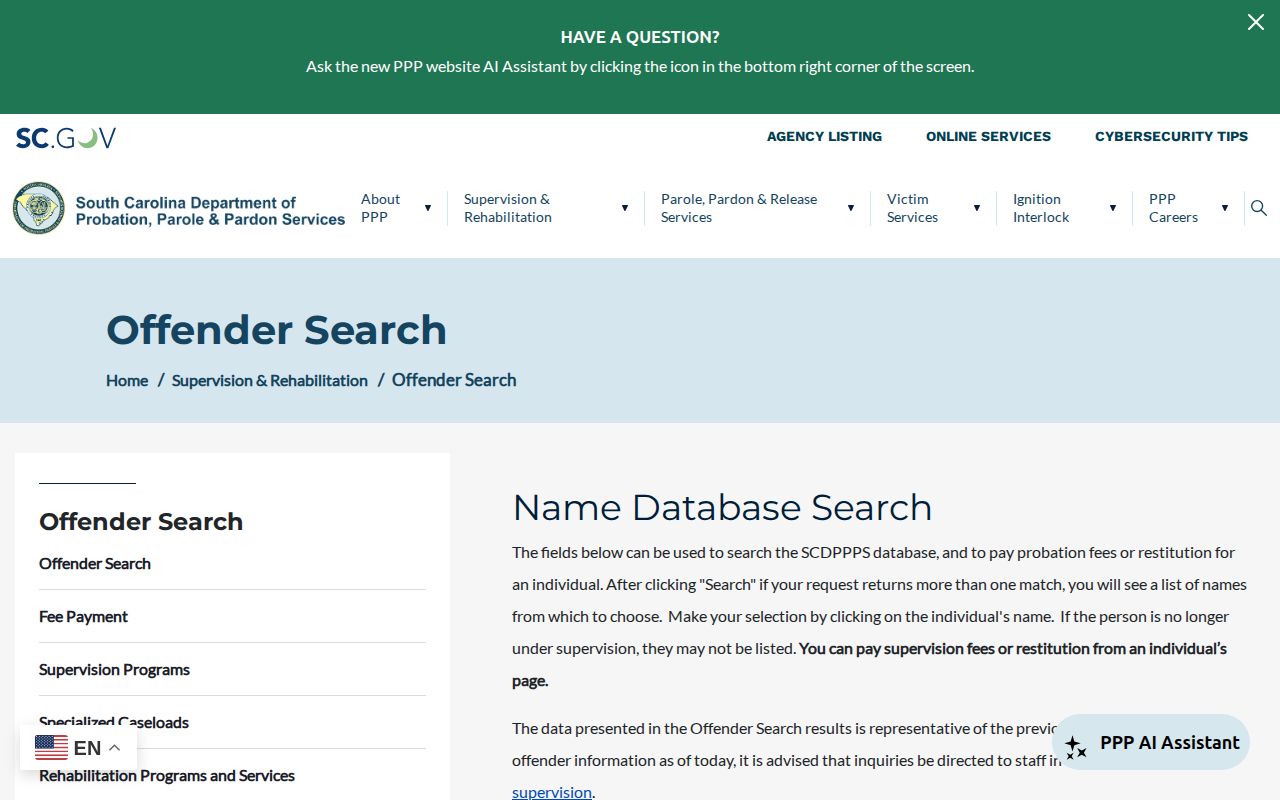
The source image reinforces why a result should be matched by identity fields and then checked against the date shown by SCDPPPS.
Lexington County Supervision Office
The local SCDPPPS office is the direct channel for current Lexington County parole and probation questions. Its directory page also publishes a date-stamped County Jurisdictional Offender Count divided among probation, parole, community supervision, supervised reentry, Jessie's Law Tracking, and supervised furlough. Those counts change. They describe the local office's supervised caseload on the displayed date, not how many people left the county jail or an SCDC prison that day.
Lexington County SCDPPPS
Agent in Charge Monica Thomas
605 West Main Street, Suite 104
Lexington, SC 29072
Office: 803-359-2551
Fax: 803-359-5235
Have the person's name and SID ready when available. Ask whether the public status is current and which office has authority over the case. The office may be able to clarify a supervision category, but an individual file can contain protected material that is not public. Emergency concerns belong with 911, not a records portal.
The official directory visually separates local contact information from the changeable caseload totals. The Lexington SCDPPPS directory is the source for both.
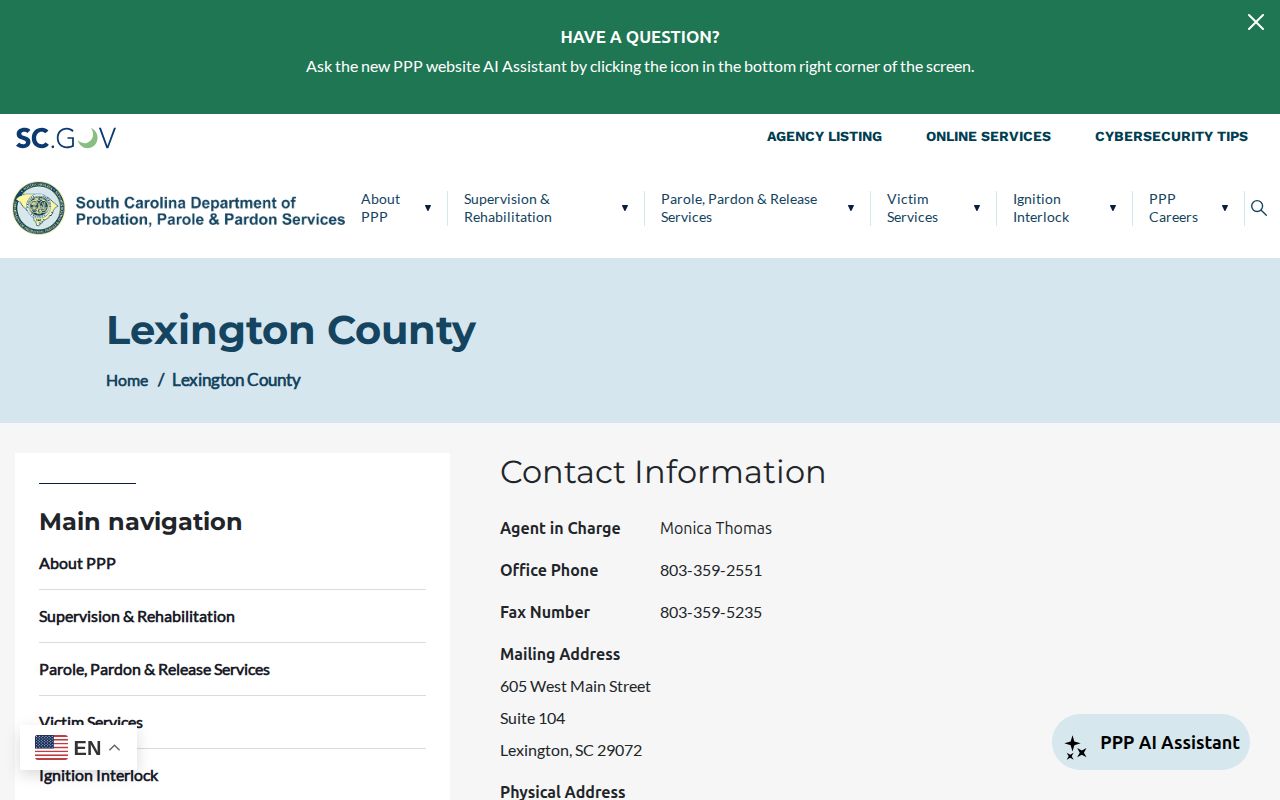
Use the office contact for a current status question rather than treating yesterday's online result as a real-time supervision certificate.
Note: SCDPPPS data lag one day, so the Lexington office is the sounder route when a supervision change may be recent.
Lexington Parole Hearing Records
Parole eligibility, a hearing, a grant, the prison release, and community supervision are five separate events. The South Carolina Board of Paroles and Pardons is a seven-member board. It can grant or deny parole and can revoke, modify, or rehear an existing parole matter. SCDPPPS supplies the public scheduling and results tools, while SCDC supplies the record of actual prison departure.
Use the parole hearing and results search by first and last name, SCDC number, or a supported name-and-month combination. Schedules become person-specific about 30 days before a hearing. Recheck because dates, postings, and results can change or be delayed. The annual calendar separates Full Board, Single Panel, Pardon, and Administrative Meeting dates, so it does not create one universal monthly hearing date. Immediate hearing help is available from SCDPPPS at 803-734-9220.
A scheduled hearing is not a grant. A posted grant is still not the gate event. SCDC and SCDPPPS must complete the release order and conditions, and the prisoner must accept them. Only then can the SCDC Released Inmate Search document the actual departure. Keep the exact public decision wording instead of translating it into a broader claim.
The official hearing search presents the person and month fields used for this lookup.
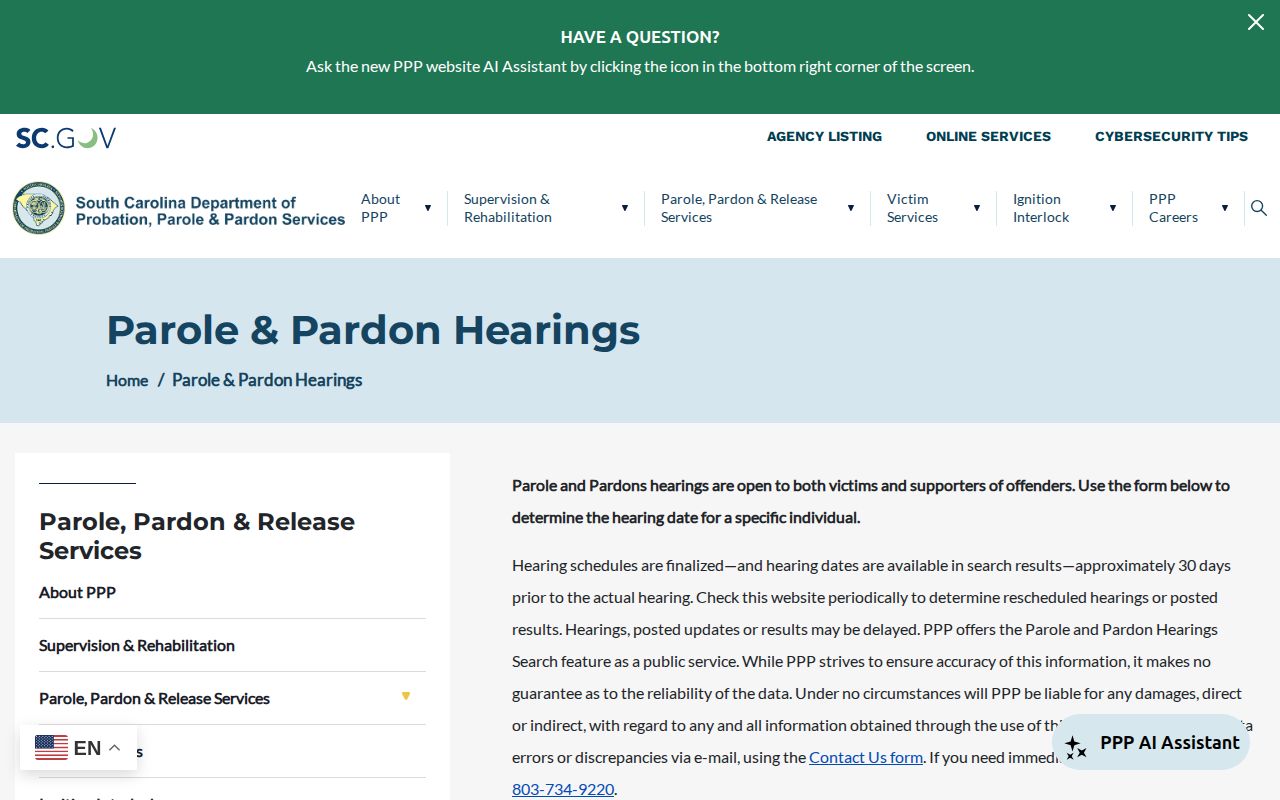
The blank official form is appropriate for a private search because it shows the process without displaying any person's case.
Lexington Supervision Violations and Warrants
A parole or probation violation does not have one automatic outcome. The supervising agency may investigate, issue or seek process authorized by law, and present the matter through the proper revocation channel. South Carolina Code Title 24 Chapter 21 keeps a parolee under Board jurisdiction and conditions during the remaining maximum term. Section 24-21-680 provides for a warrant or citation and a revocation process when a parole violation is alleged. A revocation is an official decision that may return a person to custody or alter the sentence path.
SCDPPPS also publishes a Most Wanted Offenders page with selected records and labels such as AT LARGE or CAPTURED. It is not a complete list of Lexington County absconders. An AT LARGE label means the agency is seeking the person in connection with supervision status. It does not mean lawful discharge. Absence from that selected page does not prove compliance and cannot rule out a warrant.
SC VINE can provide custody-change notices across participating county detention, SCDC, and SCDPPPS data. It is useful for notice, not for proving every supervision fact. A person held on a violation may reappear in a custody source even while an older supervision result remains visible because systems update on different schedules.
Lexington Release and Reentry Programs
Lexington County's local transition landscape is documented in the LCSD 2024 Annual Report. The report names a Pre-Release & Reentry Program, VA Outreach, LRADAC, Courage Center, a buprenorphine taper, U-Turn for Christ, religious services, and Books on Wheels. These are named detention programs, not a promise that every released person qualifies, enrolls, or receives a specific service.
This county-jail work should not be merged with state-prison reentry. A person transferred from Lexington County Detention Center to SCDC remains incarcerated and enters a different system. Someone later released by SCDC may appear as supervised reentry, community supervision, probation, or parole in SCDPPPS data. Read the SCDC release type exactly. A label such as SUPV RE-ENTRY describes continued legal status, not unconditional discharge.
For a person leaving county custody, ask LCSD about the relevant program and the actual release or transfer record. For a person leaving state prison, follow SCDC and SCDPPPS channels. Program names can help identify the right agency, but they cannot establish the date, conditions, or successful completion of supervision.
Note: A Lexington program listing shows that a service exists; only the responsible agency can confirm individual eligibility or participation.
When Lexington Supervision Ends
Physical release and legal discharge are not synonyms. A parolee has left incarceration but remains under Board authority for the applicable term and conditions. A probationer remains subject to the court order. Community supervision, supervised reentry, and supervised furlough each carry their own source record. When that status ends, the strongest confirmation comes from SCDPPPS or the court order that governs the case, not from the person's disappearance from a public search.
For state-prison history, preserve the chain of records. The SCDC Released Inmate Search supplies the actual Release Date and Release Type. The SCDPPPS search supplies prior-day supervision status. The Board page supplies hearing and decision information. The court record supplies the sentence and later revocation or modification orders. SC VINE can alert to a custody or supervision change. None is a universal ledger.
A county-jail release is different. Lexington County Detention Center records can document bond, dismissal, time served, sentence completion, or a transfer. A person who moved to SCDC, USMS, or ICE did not necessarily return to the community. Federal supervised release also falls outside SCDPPPS. Use the federal docket and supervising federal channel for that case. This custody-specific approach prevents a Lexington County parole and probation result from being stretched beyond what it proves.
South Carolina FOIA, Title 30 Chapter 4, generally supports inspection or copying of available nonexempt public records. A written request normally receives an availability determination within ten business days, or twenty business days for records more than 24 months old. That law does not make every supervision-file detail public. Identify the person and the exact event sought, then ask the office that created the record. This is the soundest way to verify a discharge date or resolve a conflict among systems.