
Lexington County Three-Day Feed
No official LCSD page, P2C filter, or indexed agency resource was verified as a rolling 72-hour release feed. The official Police-to-Citizen inmate inquiry is useful for current roster context and booking photographs. LCSD does not promise a released-person archive, a removal schedule, or a three-day view. Pages elsewhere that use “72-hour bookings” language may cover arrests rather than releases, and their jurisdiction or update method may be unclear.
Lexington County also delays online inmate listings by one day. That policy makes a three-calendar-day comparison more complicated than taking two roster snapshots. An appearance can reflect the delay. A disappearance can reflect release, transfer, rollover, a spelling mismatch, a sealed record, or portal trouble. The actual booking/release sheet is the record that states the event.
The sheriff's official notice explains the delayed listing and daily front-desk access.
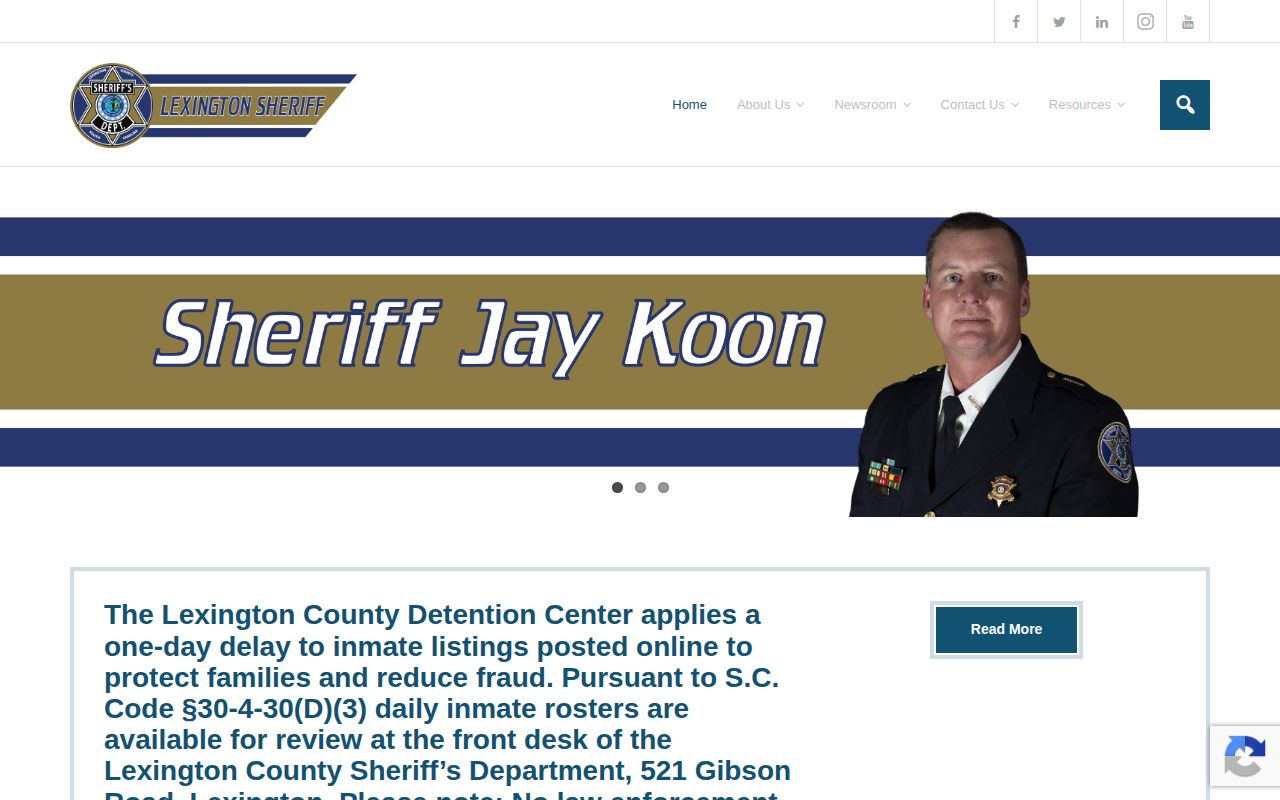
The county's own notice is the key reason not to treat a missing name as a timed release result.
Build a Lexington County Review
A sound 72-hour review follows events across three full dates, not just the current screen. Record the date and time of each search. Match legal name, date of birth, booking number, or another agency identifier. Then distinguish county detention from state prison, federal custody, or immigration custody before selecting the official source.
- Search LCSD P2C for local custody context while accounting for its one-day delay.
- Search SC VINE for the same adult and confirm the listed agency and identifier.
- Call LCSD at 803-785-8230, option 2, and ask whether county custody ended or changed.
- Review the daily roster at 521 Gibson Road if an in-person check is feasible.
- Search the correct court for bond, disposition, sentence, or later orders across the three-day span.
- Request the release sheet if the event type, time, authority, or destination remains unclear.
The P2C landing screen shows the official name-search route used for local context.
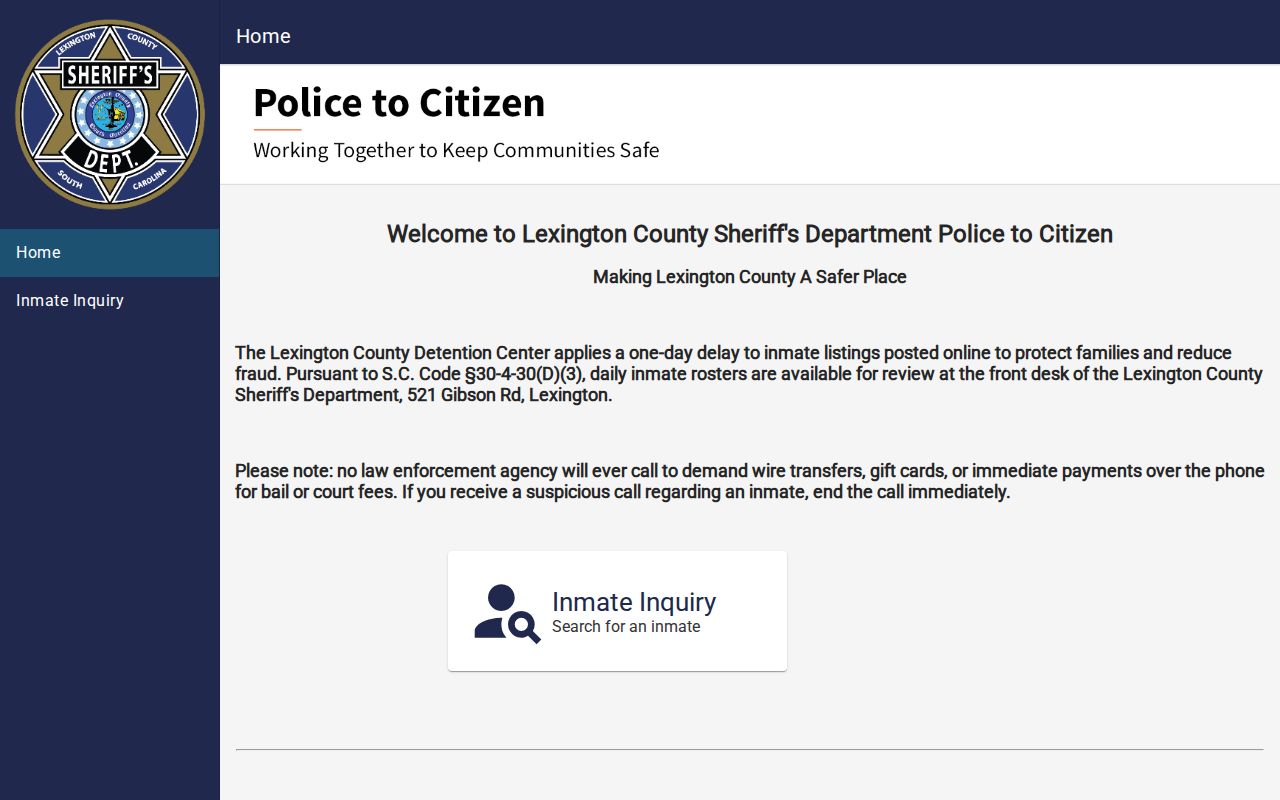
It can support an identity match, but it cannot supply a promised three-day release history.
Use the Released Last 24 Hours process when the question is limited to today or the prior day. Note: Keep the search dates because a rolling period changes each hour, while official documents preserve the actual event time.
Lexington County Weekend Releases
A 72-hour horizon matters most across weekends and holidays. Lexington County Bond Court lists weekday sessions at 10 a.m. and 3 p.m. and weekend or holiday operation from 10 a.m. to 3 p.m. The Detention Bureau separately lists bond-payment windows. Those schedules show when an order or payment may enter the release process. They do not guarantee the time of physical departure.
Staff must clear every charge and hold, validate the court authority, confirm identity, and finish jail closeout. A late order can produce a later exit. A person may also move to another agency instead of leaving custody. When Friday through Monday is under review, search by actual dates in court records and ask LCSD for the release time rather than assigning the event to the date of a hearing.
Calendar boundaries can also hide the sequence. A Friday bond decision may lead to a Saturday closeout, while the delayed public listing changes later. A holiday order may reach the jail before the public court screen reflects it. Conversely, payment made during an open window does not clear an unrelated detainer. Compare the order date, the jail's actual release timestamp, and any receiving-agency entry. Three records can bear three dates without conflicting because each marks a different step.
The Lexington County Bond Court page supplies the local operating windows.
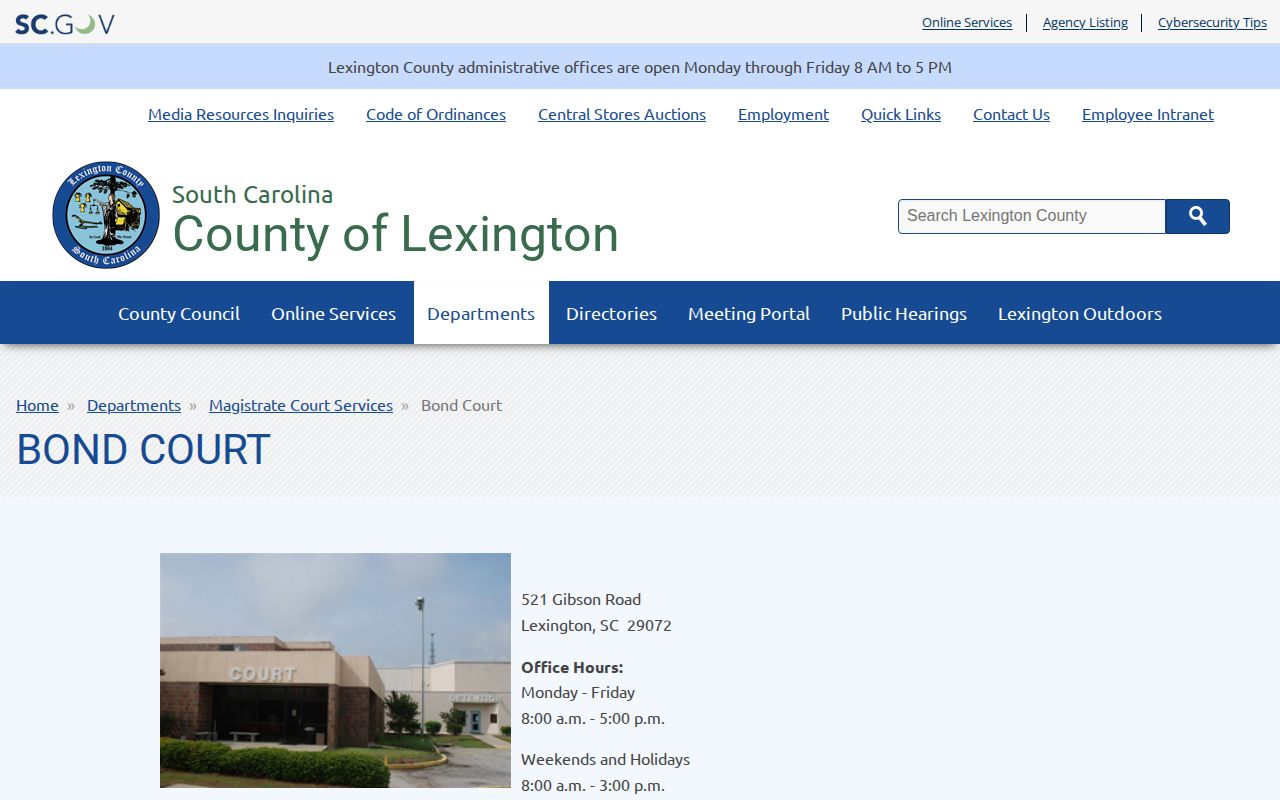
The schedule helps organize a three-day review, while the jail record establishes when custody actually ended.
Lexington County Three-Day Fields
There are no verified public columns for a Lexington County 72-hour feed. The useful fields are those to seek in the release sheet or related custody record. They let a reader separate a community release from a transfer and connect the event to the right court matter.
| Field | Purpose in a 72-hour review |
|---|---|
| Full name and date of birth | Distinguishes people with similar names |
| Booking number | Identifies the exact county detention episode |
| Booking date and time | Separates an old stay from the three-day period |
| Actual release date and time | Places the custody change within or outside the window |
| Release type and authority | Identifies bond, court action, completion, or another basis |
| Charges and case numbers | Connects the jail event to the correct docket |
| Detainer and destination | Shows whether another agency received the person |
Preserve the agency's exact release-type text. A court disposition and a physical release are related but distinct. A bond order authorizes pretrial release, while the detention record confirms the gate event after all holds clear.
Three Months Is Not 72 Hours
South Carolina FOIA includes a useful but often confused access rule. Section 30-4-30(D)(3) requires identifying documents for people confined during the preceding three months to be available for in-person inspection and copying unless an exemption applies. LCSD directs readers to the detention center front desk for daily rosters under that rule.
“Preceding three months” is not “released in the last 72 hours.” The statute concerns access to identifying documents, not a web feed, a release-only report, or an exact publication cadence. The in-person material can help reconstruct the period, but the requester must still ask for actual release date and time, release type, releasing authority, and transfer destination when those facts matter.
This distinction prevents a broad public-record right from being turned into a feed that LCSD has never promised. It also keeps the source honest around retention. P2C may change, while a formal record request can seek the durable release document.
Verify Lexington County Release Status
SC VINE offers a quicker parallel view because its FAQ says participating systems are queried every 15 minutes, and Lexington County Detention Center is listed as participating. Search the exact adult, check the agency and identifier, and read the custody status. Transfers may require re-registration. Adults out on bond are not tracked as if they remained jailed, and excluded systems make a no-result inconclusive.
Court records explain legal authority. General Sessions matters use the statewide South Carolina Public Index and Lexington Clerk channels. Municipal-police matters may remain with the issuing municipal court, and only some municipal data appears statewide. A missing statewide case can therefore be a routing issue. An order marked disposed does not alone prove the minute jail custody ended.
State-prison releases require a different source. SCDC's separate Released Inmate Search uses a date range and county selection and returns Release Date and Release Type. Selecting LEXINGTON refers to the state record's county classification, not necessarily a departure from the Lexington County jail. Federal and ICE movements likewise require their own agency paths.
A federal defendant housed at the county detention center may leave P2C because USMS moved the person, because a federal court ordered release, or because BOP received the person after sentencing. An ICE detainer can likewise turn a county departure into immigration custody. Those events belong to federal dockets, USMS, BOP, or ICE sources. They should not be counted as confirmed Lexington County community releases without that added check.
The official South Carolina VINELink portal is the person-specific alert and status channel.
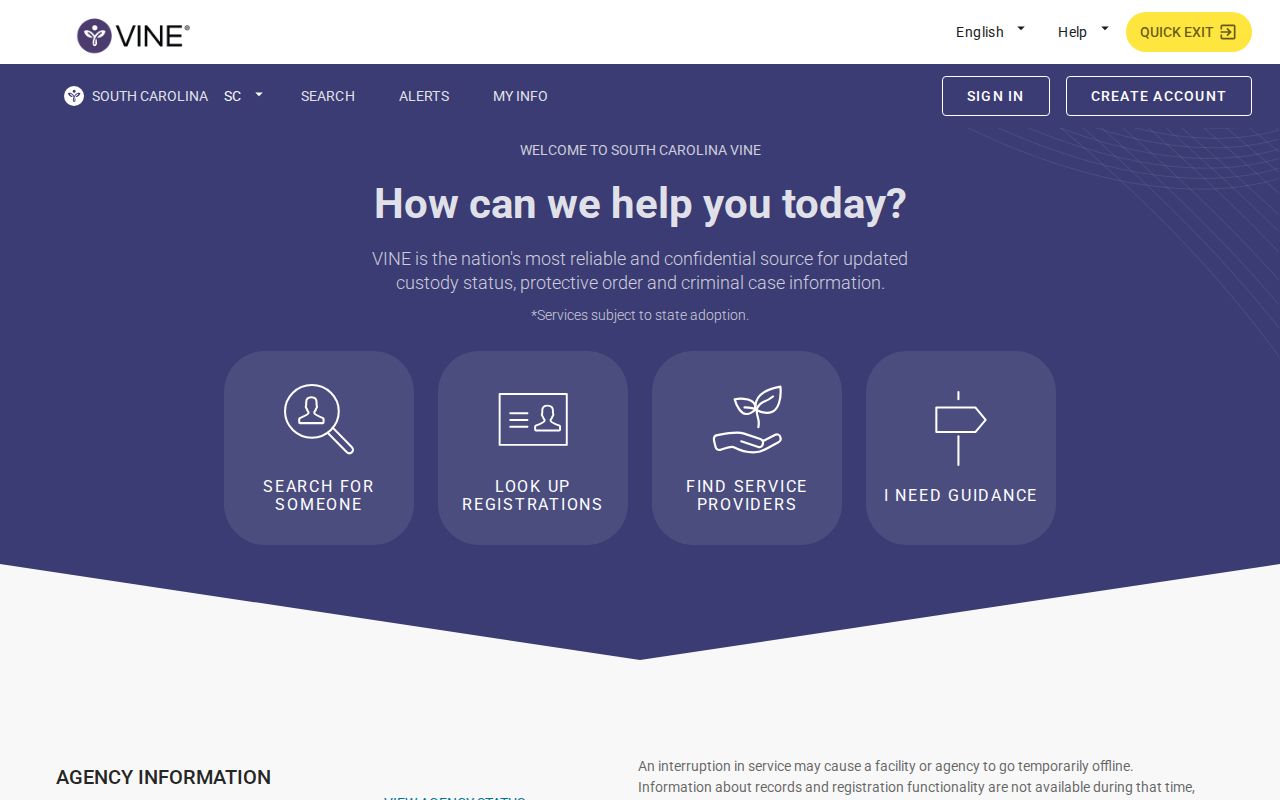
VINE supplies timely custody clues, while an agency release record provides lasting proof of the event.
Request Lexington County Release Records
When the three-day reconstruction remains uncertain, use the LCSD FOIA request channel. Direct the request to the LCSD FOIA Office at 521 Gibson Road, Lexington, SC 29072, email FOIA@lcsd.sc.gov, or call 803-785-2442. Give the full name, date of birth when known, approximate booking date, booking or case number, and exact three-day interval.
Ask for the booking/release sheet and specify the fields needed. A focused request for actual booking and release times, release type, releasing authority, and destination is more useful than a vague demand for all jail material. It also lets the office identify a smaller record set. Disclosure remains subject to lawful exemptions, redaction, retention, and sealed or expunged status.
The official request instructions show the county-specific records route.
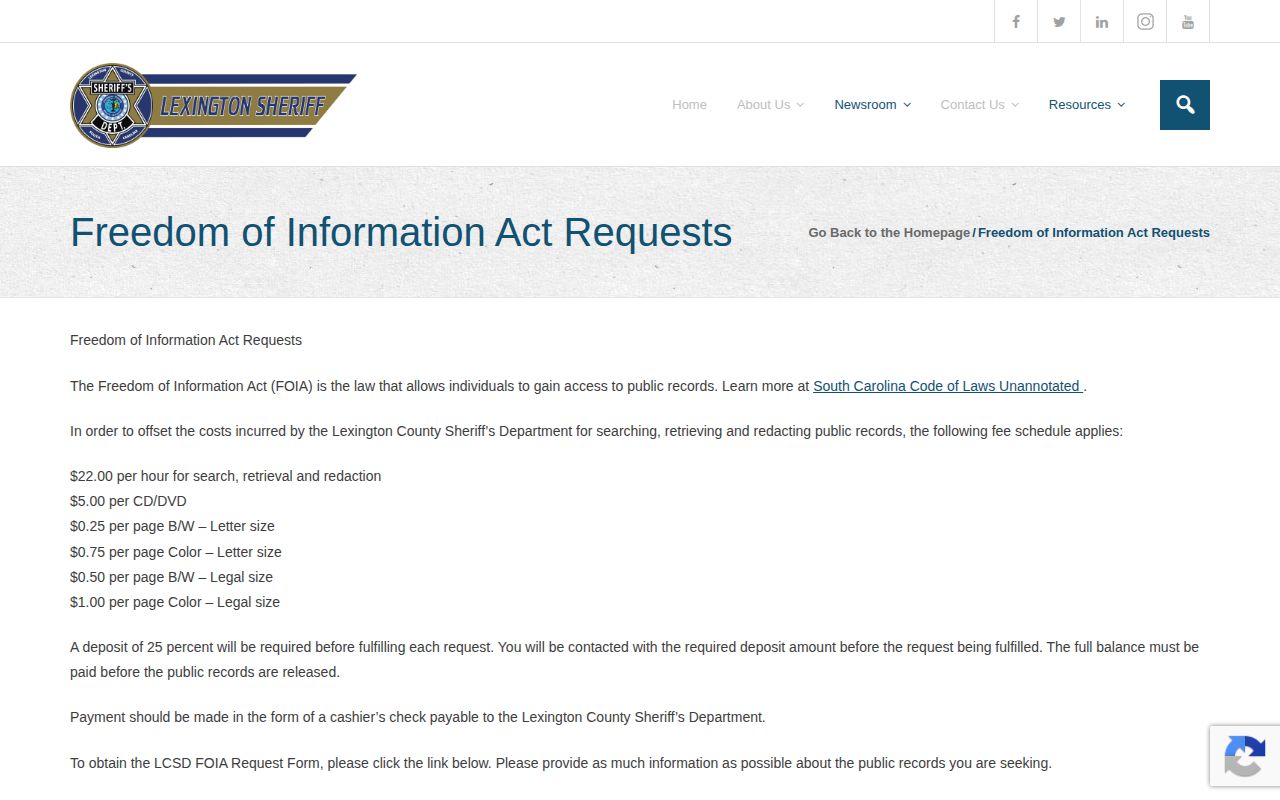
The formal request is the best fallback when the delayed roster cannot establish a release across the full period.
Public Record Search
Sponsored Results